North or South Coast of Crete? The Honest Answer on Where to Stay
The north coast has the airports, the highway, the resorts and the long sandy beaches — and the summer north wind. The south has the Libyan Sea, small villages, fewer roads and shelter from the meltemi. How to pick the side, or both.
Crete has two coasts separated by a wall of mountains, and they feel like two different islands. The north has the airports, the highway, the big resorts, the long sandy beaches — and the summer north wind. The south faces the Libyan Sea: small villages, fewer roads, deep clear water and, on meltemi days, the calm side of the island. For a first family holiday, the north is easier. For a slower trip, or a second visit, the south is the better half. The wind, sunshine and drive figures below come from Greek national weather service data, reference sources and route planners, checked in September 2026; the rest is our own judgement from living on the north coast.
The honest facts
- The meltemi
- a north wind that blows roughly mid-May to mid-September, strongest in the afternoons, at times force 7–8 — it hits the north coast face-on.
- The south’s shelter
- the mountains put the south coast in the wind’s lee, though gorges funnel gusts onto some valley-mouth beaches.
- Drive times
- Rethymno–Plakias about 40 minutes, Heraklion–Matala about an hour or more, Chania–Hora Sfakion about 1 hour 20 (route planners).
- Roadless villages
- Loutro has no road; ferries link Hora Sfakion, Loutro and Agia Roumeli, with Sougia and Paleochora in the April–October season.
- Sunshine
- Ierapetra logs about 3,100 hours a year, among Greece’s sunniest places.
- Logistics
- both main airports and the highway are on the north.
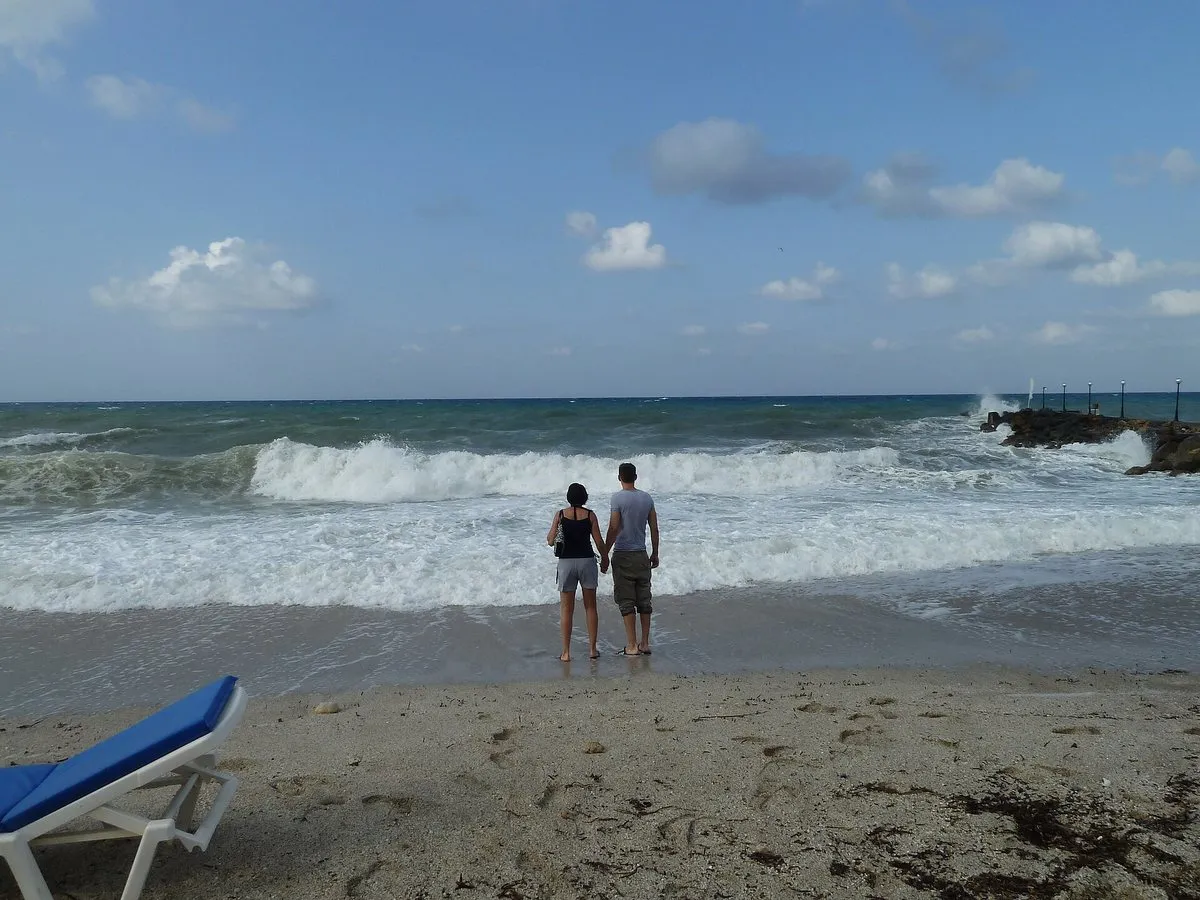
The case for the north
The north is the easy coast. The airports at Heraklion and Chania are here, the highway links everything, and the resorts — Hersonissos, Stalis, Malia, the Chania strip, Rethymno — have the long sandy beaches, the family infrastructure and the evening choice that a first holiday often wants. Day trips run in every direction without long mountain drives. The price is the wind: in July and August the meltemi often turns the afternoon sea rough on north-facing beaches, and learning to swim early or find a sheltered cove becomes part of the routine. How to handle that is in where to swim when the meltemi blows, and how to choose within the busiest stretch is in Hersonissos, Stalis or Malia.
The case for the south
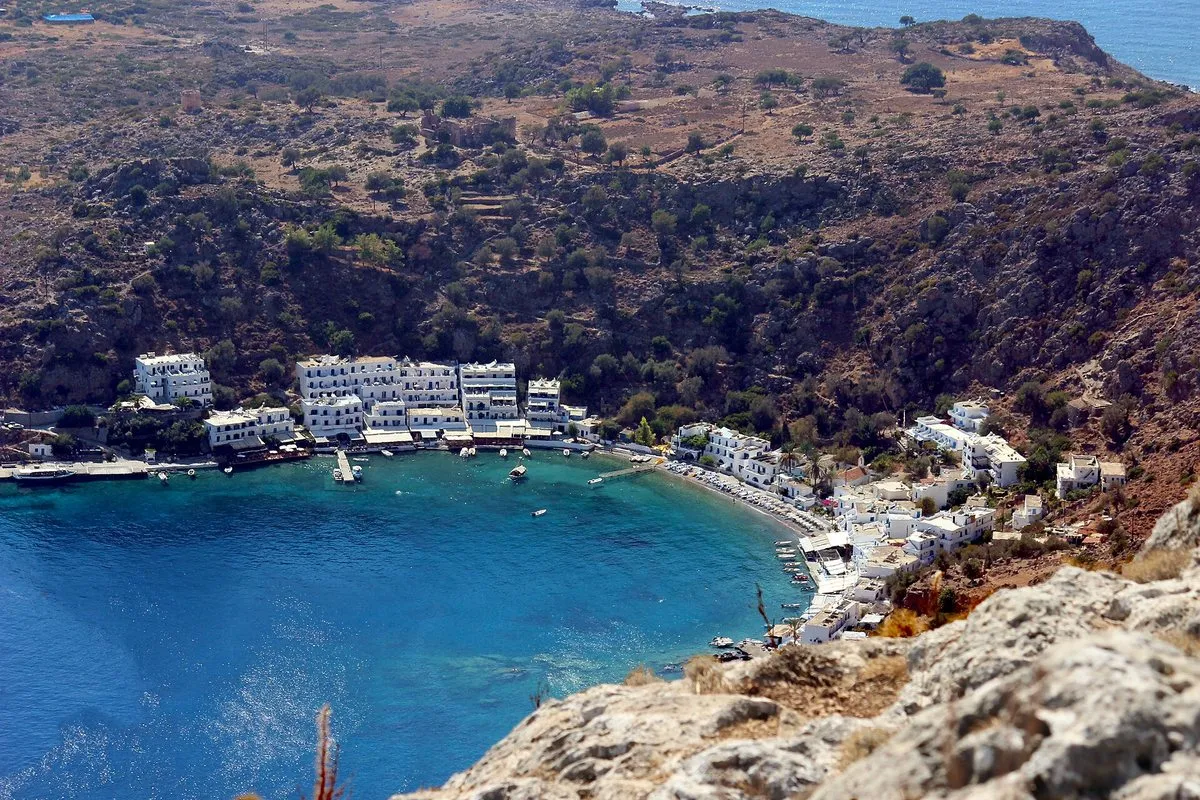
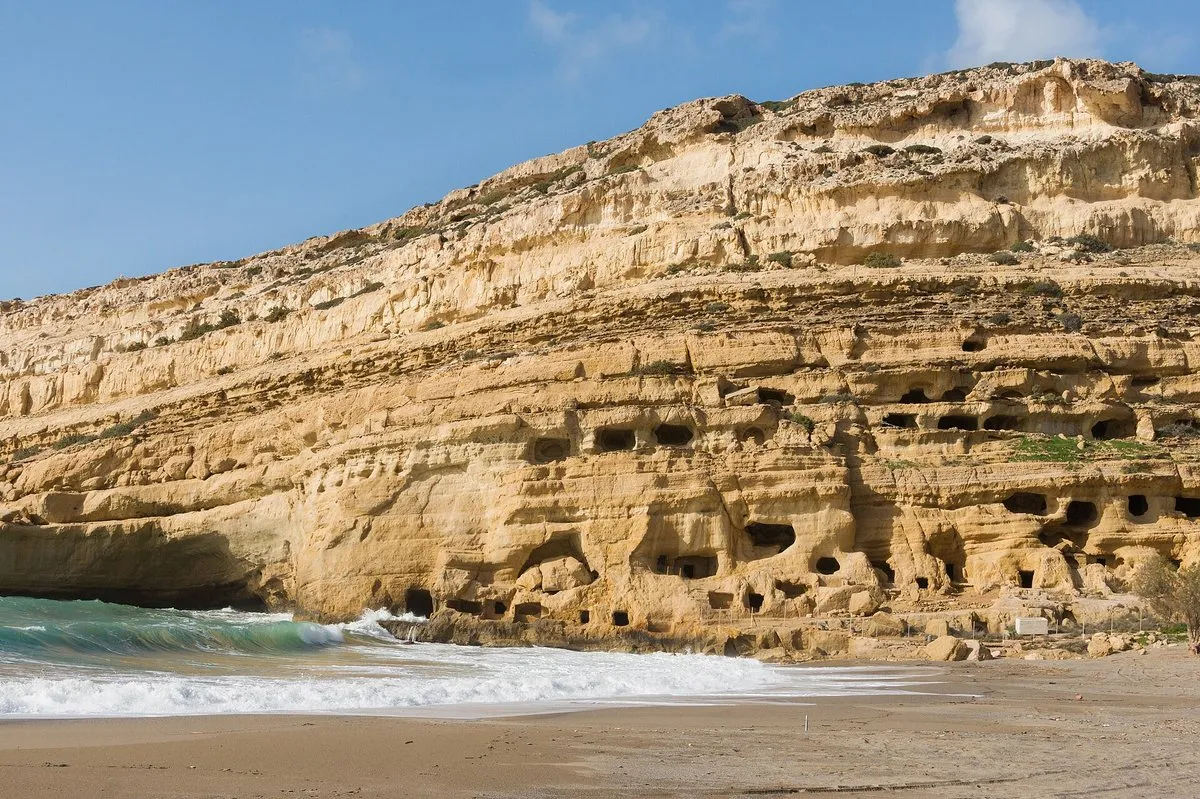
The south is the slower coast. Villages such as Plakias, Matala, Paleochora and Ierapetra face the Libyan Sea with the mountains at their backs; the development is smaller in scale, and in the south-west some places — Loutro above all — have no road at all and are reached by boat, as in Loutro and Sfakia. On days when the north coast is white with waves, the south is often calm. The price is distance: every trip to Knossos, Chania or the airport is a drive over the mountains, and evening choice is limited to what the village offers.
Doing both
The strongest option for a week or more is a split: most of the stay on the north for the logistics and the sights, then three or four nights on the south to slow down. From a north-coast base, the south is also a day trip — Matala from Heraklion, Plakias and Preveli from Rethymno, Hora Sfakion from Chania — though you spend a good part of that day on mountain roads. If you are also weighing up east against west, read East or West Crete alongside this.
The honest downside
The north’s convenience comes with the summer wind, busier beaches and resort sprawl in places. The south’s calm comes with long drives, fewer services, limited nightlife and, in the south-west, timetables that shape your day. Neither side is the “real” Crete; they are two halves of it.
Pick the north if: it is your first trip, you are travelling with children or without a car, or you want the most sights within easy reach. Pick the south if: you want quiet villages, calmer water in the meltemi and do not mind driving over the mountains for the sights.
Photos on this page: the north-coast waves by Deror_avi (CC BY-SA 3.0), and Loutro by Maesi64 and Matala by Jebulon (both CC0), via Wikimedia Commons, resized for the web. Wind, sunshine, ferry and drive-time figures were checked against Greek national weather service data, reference sources, the south-west coast ferry timetable and route planners for the date shown at the top of this guide; the recommendations are our own judgement. Nobody pays to be featured in a guide — no business, no sponsor, no paid mention, ever. Adverts, where they appear, are labelled as adverts.
-
North and south — Every south-coast base is reached over the mountains; the north is linked by the highway.
1 Chania 2 Hersonissos 3 Hora Sfakion 4 Paleochora 5 Plakias 6 Matala 7 Ierapetra
Tap a name to open it in your map app. These are options, not an order — pick by the day you have.
Should I stay on the north or south coast of Crete?
The north coast for easy logistics — both main airports, the highway, resorts, long sandy beaches and family facilities. The south coast for a quieter, slower stay in small villages on the Libyan Sea, with shelter from the summer north wind but longer drives to everything else.
Is the south coast of Crete less windy?
Usually, during the meltemi. That summer north wind blows roughly from mid-May to mid-September, strongest in the afternoons, and hits the north coast face-on. The south coast is in the lee of the mountains, though gusts can funnel down gorges onto beaches at valley mouths.
How long does it take to drive from the north to the south coast of Crete?
By route planners, roughly 40 minutes from Rethymno to Plakias, about an hour or a little more from Heraklion to Matala, and around 1 hour 20 from Chania to Hora Sfakion. The roads cross the mountains and are slower than the distances suggest.
Can you reach south-coast villages without a car?
Some, by bus from the north coast, and in the south-west by ferry. Loutro has no road access at all; boats link Hora Sfakion, Loutro and Agia Roumeli, with Sougia and Paleochora added in the April–October season. Check current timetables locally.
Is the south coast of Crete sunnier?
The south is generally sunnier and warmer. Ierapetra, in the south-east, records about 3,100 hours of sunshine a year in Greek national weather service data, among the highest in Greece. Rainfall figures, however, do not show it as clearly drier than Heraklion.
One email a month — only when something on this island actually changes. No spam, no partners, one-click unsubscribe. Read past issues before you decide.