The Music at a Cretan Panigiri: Who You're Actually Listening To
The lyra, the laouto, and the players whose names are on the posters — Xylourakia, Samolis, the Stratakis brothers, Saridakis.
At a panigiri the poster names the band before it names the saint, and that tells you what the evening is really organised around. Cretan festival music is not background — people travel for a particular lyra player the way they would for a football fixture, and the difference between a village booking a name and a village booking whoever was free is the difference between a good night and a long one.
This is a guide to what you are hearing and whose names to look for.
The one-minute version. Core line-up is lyra plus one or two laouta; violin instead of lyra in parts of Chania and around Sitia. Names currently on the biggest posters include the Xylourakia (Nikos and Antonis Xylouris), Grigoris Samolis, the Stratakis brothers, and Kostas Saridakis. Entry is often €16–20 with food and drink, sometimes free. Music rarely starts before 23:00 and the good part is after 01:00.
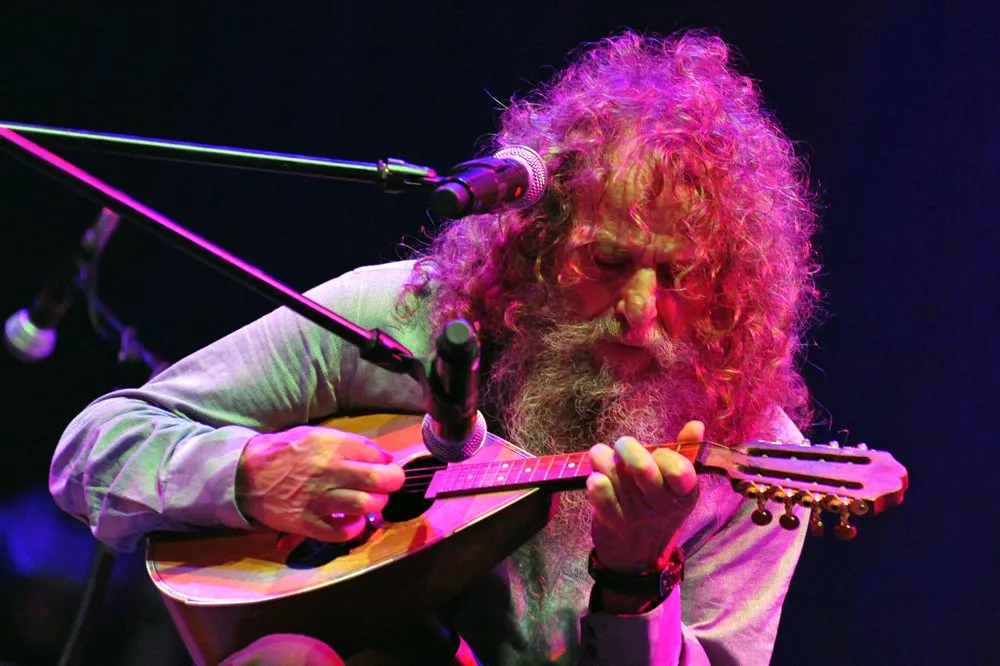
What the instruments are doing
The lyra is a small pear-shaped bowed instrument with three strings, held upright on the knee rather than under the chin. It carries the melody and it is the voice of the ensemble — everything else is built around it. Modern Cretan lyra owes its shape and volume largely to twentieth-century changes made to project over a crowd.
The laouto is the long-necked lute alongside it. To an outside ear it sounds like accompaniment; in practice it is the engine. A great laouto player drives the tempo, decides when the dance accelerates, and holds the whole square together. In Crete the laouto is not a supporting role — families are known for it.
And then the violin, which is where the map matters. Around Chania in the west and around Sitia in the far east, the violin, not the lyra, is the lead instrument in the older tradition. If you go to a festival in Sitia and hear a violin leading, that is not a modern substitution — it is the local way of doing it. Central Crete, Rethymno and Heraklion, is lyra country.
The Anogia dynasty, and why every poster leads back to it
You cannot talk about this music without the Xylouris family of Anogia.
Nikos Xylouris (1936–1980) — Psaronikos — became the most famous Cretan voice of the century and a national figure during the junta years. He died at 43. His house in Anogia is a small museum, and the village has never stopped being a musical centre because of it.
Psarantonis — Antonis Xylouris, born in Anogia in 1943, Nikos’s brother — is still playing, and plays like nobody else: harsh, percussive, deliberately unpretty, and completely uninterested in whether you are enjoying it. He is a grandson of Karamouzantonis, another lyra name. If you get a chance to see him, take it; it is not a comfortable listen and that is the point.
Psarogiorgis — Giorgos Xylouris, Psarantonis’s son — is one of the finest laouto players in Greece and, in the version of him that surprises visitors, half of Xylouris White, a duo with Australian drummer Jim White that plays international festival stages.
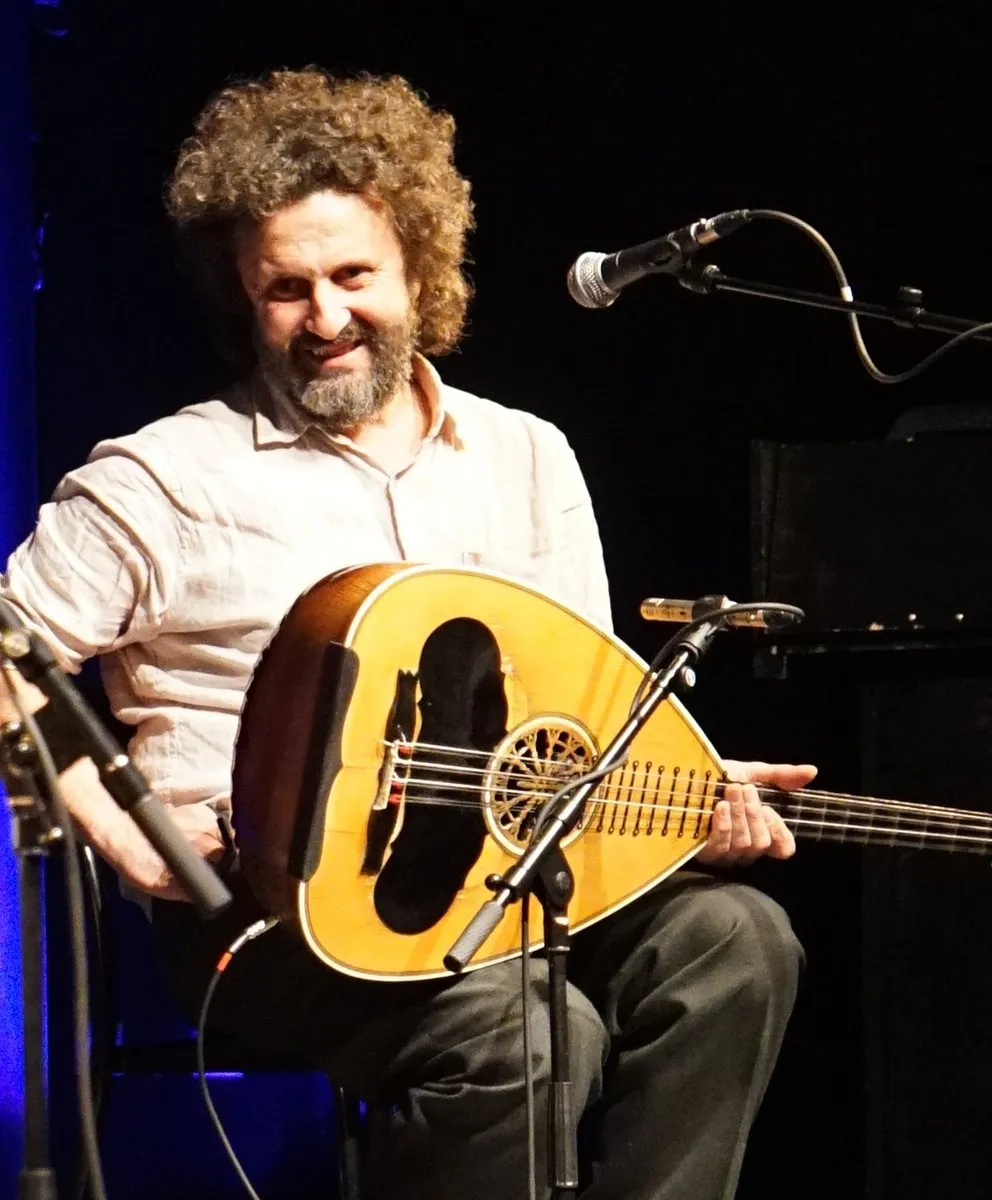
The names on this summer’s posters
Ξυλουράκια — the Xylourakia. Nikos and Antonis Xylouris, Psarogiorgis’s sons and Psarantonis’s grandsons: lyra and laouto, fourth generation. They are the biggest draw at village festivals in eastern Crete in particular, they play fast and loud, and their song Meraklina is the one the whole square will sing. The detail that delights people: the two brothers, with their sister Apollonia, also have a punk band called Frenzee. Same family, different volume.
Γρηγόρης Σαμόλης — Grigoris Samolis. A lyra player with his own group, heavily booked across the island’s festival circuit and associated with Episkopi in Mylopotamos. If you see his name on a poster you are getting a straight, strong, danceable night rather than anything experimental.
Στρατάκια — the Stratakis brothers. Giorgos and Nikos Stratakis, singers rather than primarily instrumentalists, with a recording career and a reputation for the mantinada — the improvised or traded rhyming couplets that are the literary half of this music. They recorded Zaeri with Samolis, which spent a summer being sung back at them in village squares.
Κώστας Σαριδάκης — Kostas Saridakis. Lyra, with roots in Petrokefalo in Malevizi where he played his first glenti as a boy on an instrument his father made him. A traditionalist’s traditionalist and a very safe bet for an authentic night.
Others worth recognising if you see them: Nikos Zoidakis, and in the east the Sitia violin players — the Priniotakis name comes up constantly on that side of the island.
The ones you should know but will not see
Thanasis Skordalos and Kostas Mountakis are the two twentieth-century lyra players every Cretan musician measures themselves against. Leonidas Kladós from Mires belongs in the same conversation. All are gone, all are on every streaming service, and an hour with any of them before you travel will change what you hear at a festival.
If the instrument itself interests you more than the party, Houdetsi south of Heraklion has a musical instrument museum and a workshop tradition built up around Ross Daly, and it is the serious version of this subject.
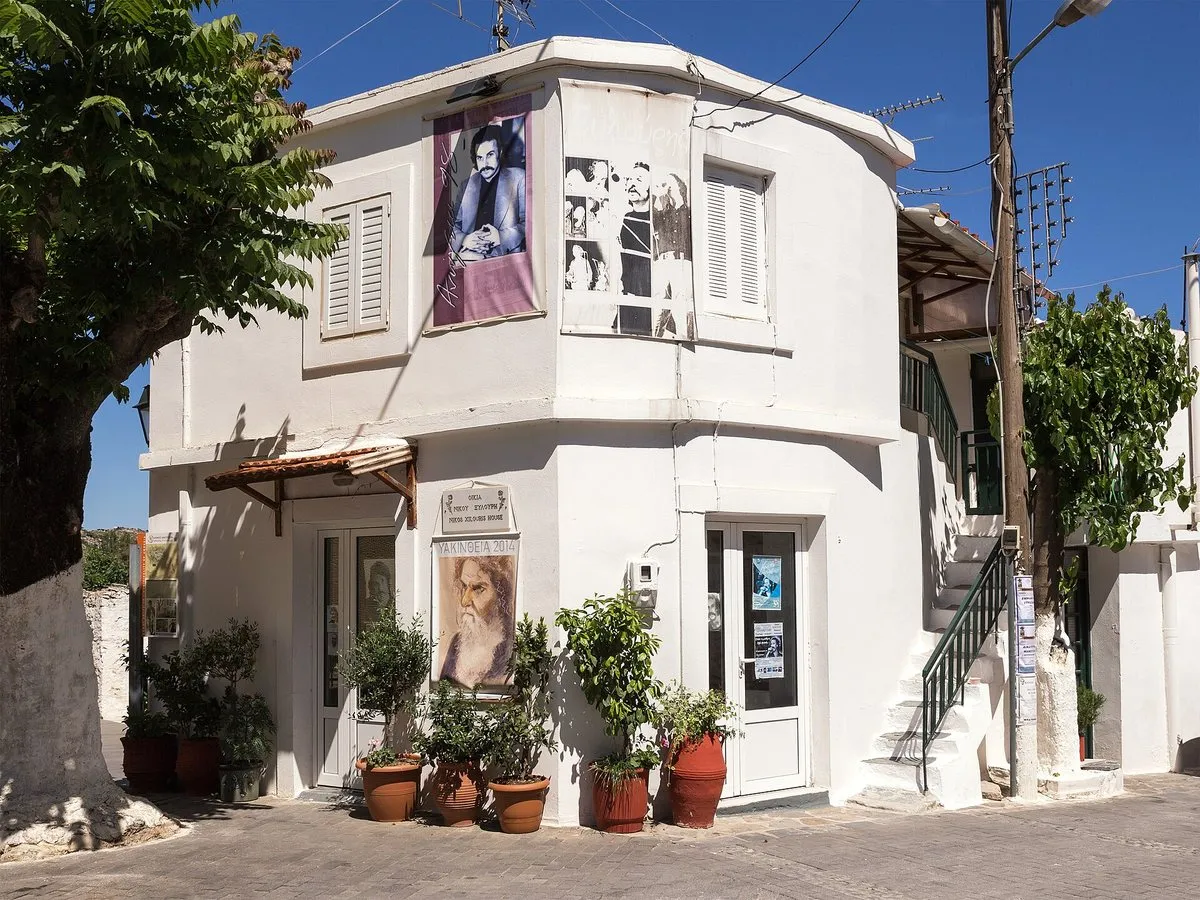
How to read a festival poster
The layout is always the same. The saint and the date at the top. The village and the venue. Then, in the largest type on the sheet, the band. If a name is set that big, the village has paid for it and expects a crowd.
Look for a price near the bottom: figures like 16€ or 20€ usually mean full food with wine and raki included; a lower figure alongside it, often around 10€, means drinks only. Free events exist and are usually funded by the church committee, but they are no longer the majority, and any guide telling you Cretan festivals are always free has not read a poster recently.
Start time will say 21:00. This means food. The music will begin somewhere around eleven.
The honest downsides
Volume. Cretan PA systems are set loud and conversation near the stage is not an option. This is not a listening event; it is a dancing event with amplification to match.
Repertoire fatigue. After three or four festivals you will notice the same twenty songs. That is the tradition working as intended, but it does mean the fifth night is not as revelatory as the first.
Staged versus real. Larger events near the resorts hire dance troupes in costume and run a programme. Enjoyable, and completely different from a square where the dancing is just what people do. The poster usually gives it away: a scheduled running order means a show.
Availability. The good bands are booked a year ahead for the big dates, and 15 August is when everyone wants everyone. Villages in the Amari, around Anogia and across the Lasithi interior are where the strongest bills tend to land.
Worth learning four or five names before you travel, because it converts a poster on a lamp post from noise into information — a Xylourakia or Samolis booking tells you the village is expecting five hundred people and a night that ends at dawn, and that is worth planning around. Listen to Skordalos and Mountakis first so you have something to measure against, and treat the violin in Sitia or Chania as correct rather than odd. Skip the resort-adjacent events with a printed running order if what you want is the real thing: the difference is obvious within ten minutes, and the real thing is always in a village somebody had to tell you about.
Photos on this page: Psarantonis by Henryk Kotowski (CC BY-SA 3.0); Giorgos Xylouris by G.Garitan (CC BY-SA 4.0); Nikos Xylouris’s house in Anogia by Unukorno (CC BY 4.0), via Wikimedia Commons, resized for the web. Nobody pays to be featured on this site, and no musician named here has any connection to it.
Who are the Xylourakia?
Nikos and Antonis Xylouris, a lyra-and-laouto duo from the Anogia musical dynasty. They are grandsons of Psarantonis and sons of the laouto player Giorgos Xylouris, known as Psarogiorgis, which makes them the fourth generation of that family on Cretan stages. Their best-known song is 'Meraklina', and they play village festivals across the island.
Which instruments are played at a Cretan festival?
The core is lyra and laouto — a bowed three-string lyra carrying the melody and one or two laouta driving the rhythm. In parts of western Crete around Chania and in the far east around Sitia the violin takes the lyra's role, which is a genuine regional split rather than a matter of taste.
Do you pay to get into a Cretan panigiri?
It varies more than most guides admit. Some are free church-committee events; many advertise a set price — around €16 to €20 for full food, wine and raki, or roughly €10 for drinks only. The price is usually printed on the poster, so photograph it and ask someone to translate.
Who was Nikos Xylouris?
The most famous Cretan singer of the twentieth century, from Anogia, known as the Archangel of Crete. He died in 1980 at 43. His brother Antonis — Psarantonis — is still performing, and his house in Anogia is now a small museum you can visit.
How do you know if a panigiri will have good music?
Read the poster. If a named band is billed in large letters, someone has paid for a group with a reputation and the night will run late. If it just says 'traditional music', it may well be excellent and local, or it may be a PA and a playlist. Asking at the village kafeneio settles it in one sentence.
One email a month — only when something on this island actually changes. No spam, no partners, one-click unsubscribe. Read past issues before you decide.