Sougia & Paleochora: The Slow South-West, Honestly
Two low-key south-coast towns for people allergic to resorts — long beaches, tamarisk shade, gorge walks and zero nightlife arms race.
Sougia and Paleochora sit an hour-and-something over the mountains from Chania, facing Libya, competing gently for the same traveller: the one who wants a long beach, a taverna with tamarisks, a book, and no schedule. Neither is a secret; both remain blessedly under-developed. The choice between them is a personality question.
The honest facts
- Sougia
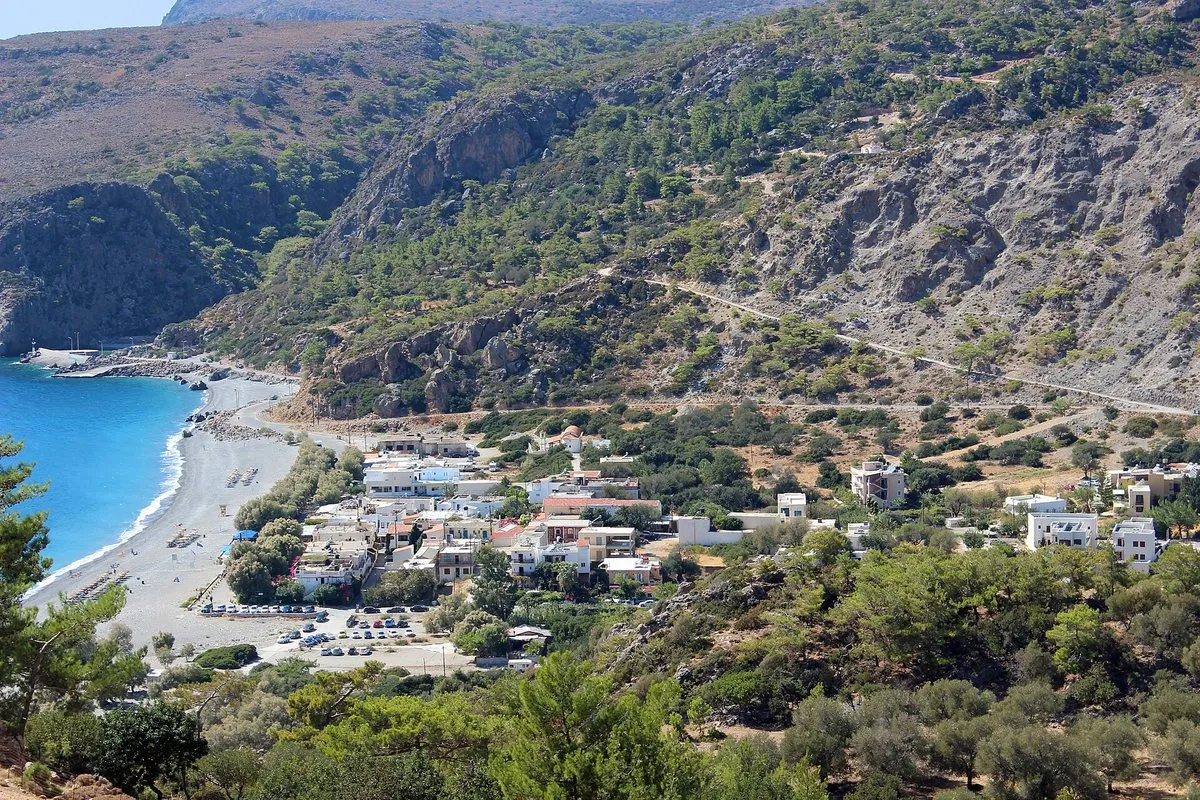
- one long grey-sand-and-pebble bay, one street of tavernas, famously mellow, with the Agia Irini gorge walk delivering hikers to its beach daily. The far end of the beach is traditionally clothing-optional and everyone coexists politely.
- Paleochora
- an actual small town on a peninsula with two beaches — sandy Pachia Ammos on one side, pebbly on the other, so one is always sheltered from the wind. More shops, more rooms, a little more life after dark, still nobody’s party capital.
- Getting there
- decent mountain roads from Chania (both roughly 70–77 km, depending on the source), roughly 1h15–2h; seasonal south-coast ferries link the two towns with each other and with Agia Roumeli, Loutro and Gavdos — check current schedules.
- Costs
- rooms and meals run noticeably kinder than the north coast in season.
Choose Sougia if
You want the smallest viable amount of civilisation attached to a great beach. Days here are swim, read, gorge-walk, eat, repeat; the evening entertainment is the sky.
Choose Paleochora if
You want the same tempo with a functioning town around it — a bakery in the morning, a choice of tavernas, the wind-proof two-beach trick, and the option of the little boat to Elafonisi on the right day.
The gorge bonus
From either base the E4 path and the local gorges (Agia Irini above Sougia especially) offer proper walks that end in sea. This is the corner of Crete where hiking and swimming live in the same day without a car shuttle.
Ferries and buses
On this coast the boats are part of the transport system, not just an excursion. ANENDYK, the operator of the south-west line, publishes timetables linking Paleochora, Sougia and Agia Roumeli, with connections at Agia Roumeli for Loutro and Chora Sfakion, and sailings on to Gavdos. Its current timetables run to 31 October 2026; for winter sailings, check the operator’s routes page rather than any guidebook. Adult one-way fares listed in October 2026 were roughly €16 between Paleochora and Sougia, €25 from Paleochora to Agia Roumeli and around €35 to Gavdos, with different prices on subsidised Gavdos sailings. Bad weather cancels boats — the operator posted exactly such a notice on 3 October 2026 — so leave slack before a flight.
KTEL Chania runs buses from Chania to both Paleochora and Sougia; its autumn timetable, valid from 26 September 2026, is published as a PDF on e-ktel.com. Check it before building a car-free stay around the bus.
Beyond the beach
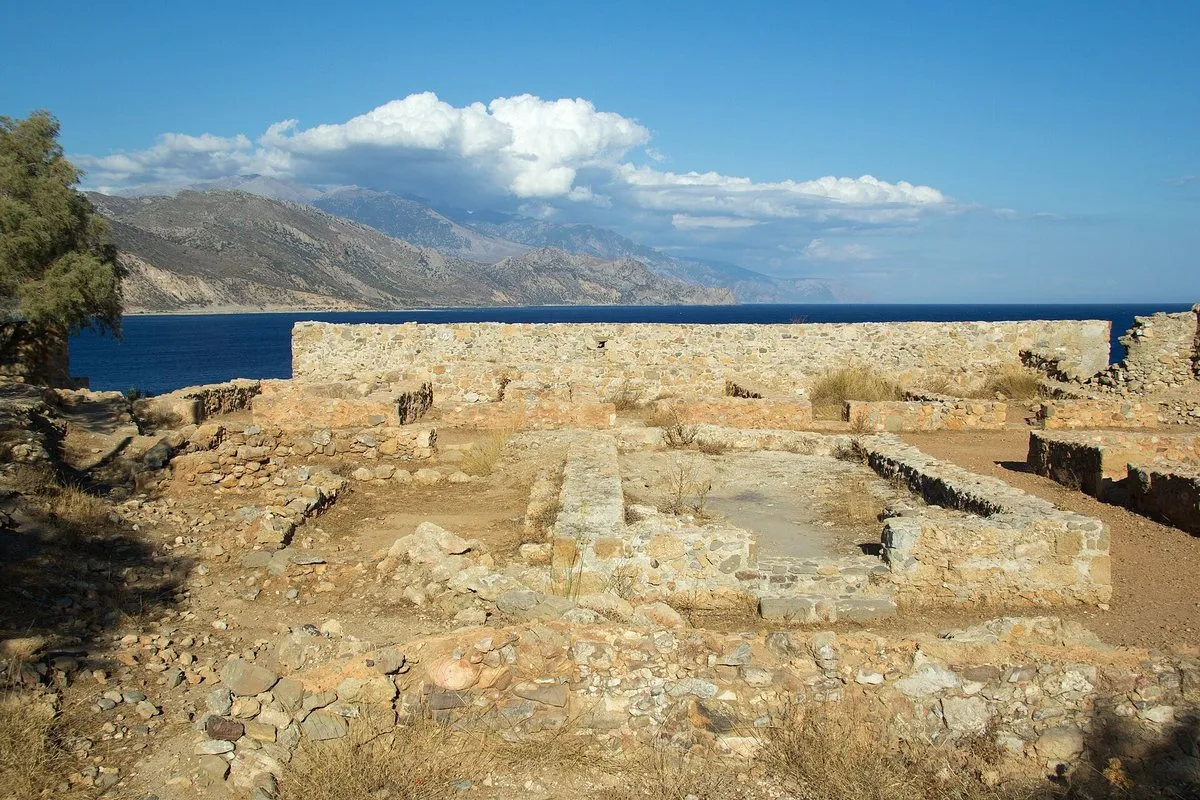
Paleochora is much the larger place: about 2,200 residents in the 2021 census, against fewer than a hundred in Sougia village. On the peninsula stand the remains of the Venetian fort of Selino, built in 1278, destroyed in 1332 and rebuilt two years later, knocked down by Barbarossa in 1539 and refurbished in 1595; the town also sits on the E4 long-distance trail. Sougia was ancient Syia, the harbour of the inland city of Elyros, and a mosaic from its Byzantine-era basilica is now held by the Archaeological Museum of Chania. The hill villages behind it — Livadas, Moni and Koustogerako — were destroyed by the occupying German forces in 1943 as a reprisal for local resistance, history worth knowing as you drive through. From Sougia, the walk west along the E4 to ancient Lissos, about an hour and a half each way, is the obvious half-day outing.
The honest downside
Getting here eats real time, the sand is not Caribbean-white anywhere, and if you crave nightlife or shopping you will be bored by Tuesday — which is exactly the filter the regulars rely on.
Worth your time if: slow travel is the goal, not the compromise. Skip it if: you are based on the Heraklion coast for a week — this is its own holiday, not a day trip.
Photos on this page: Sougia by Maesi64 (CC0, public domain dedication) and the kastro by Zde (CC BY-SA 4.0), via Wikimedia Commons, resized for the web. Everything above was checked for the date shown at the top of this guide. Sections added in October 2026 were checked against published sources rather than on a new visit. Nobody pays to be featured in a guide — no business, no sponsor, no paid mention, ever. Adverts, where they appear, are labelled as adverts.
The quick scores
Sougia
- Crowds
- 2 out of 5one street, and it stays that way
- Nightlife
- 1 out of 5bored by Tuesday, which is the filter
- Organised beach
- 2 out of 5grey sand and pebble, barely organised
- Car needed
- 4 out of 5that or the south-coast ferry
- Dinner on foot
- 3 out of 5one street of tavernas
- Prices
- 2 out of 5kinder than the north coast
Paleochora
- Crowds
- 3 out of 5an actual town, busier than Sougia
- Nightlife
- 2 out of 5more life, still not a scene
- Organised beach
- 3 out of 5sandy one side, pebble the other
- Car needed
- 4 out of 51h15-1h45 of mountain road from Chania
- Dinner on foot
- 4 out of 5a town's worth of tables
- Prices
- 2 out of 5kinder than the north coast
More dots means more of the thing named, never “better”. What each level means. Scored August 2026 from the reporting on this page.
-
The two bases
1 Sougia 2 Paleochora
Tap a name to open it in your map app. These are options, not an order — pick by the day you have.
Should you choose Sougia or Paleochora?
A personality question. Sougia is one long bay and one street of tavernas - the smallest viable amount of civilisation attached to a great beach. Paleochora is an actual small town on a peninsula with more shops, more rooms and a little more life after dark.
Why does Paleochora have two beaches?
It sits on a peninsula, with sandy Pachia Ammos on one side and pebble on the other. That means one of them is always sheltered from whichever way the wind is blowing - a genuinely useful trick on this coast.
How long is the drive from Chania to Sougia or Paleochora?
Roughly an hour and a quarter to two hours on decent mountain roads; both towns are roughly 70–77 km from Chania by road, depending on the source. Seasonal south-coast ferries also link them with Agia Roumeli, Loutro and Gavdos - check current schedules, which change with the season.
Is there a ferry from Paleochora to Sougia?
Yes. ANENDYK runs the south-west coast line linking Paleochora, Sougia and Agia Roumeli, with connections for Loutro, Chora Sfakion and Gavdos; its published timetables run until 31 October 2026. The adult one-way fare between Paleochora and Sougia was listed at roughly €16 in October 2026 — check the operator's routes page for winter sailings and weather cancellations.
Can you walk a gorge from Sougia?
Yes - the Agia Irini gorge delivers hikers onto Sougias beach daily, which is one of the reasons the village stays mellow rather than empty. This is the corner of Crete where hiking and swimming happen in the same day without a car shuttle.
Is Sougia a nudist beach?
The far end of the beach is traditionally clothing-optional and everyone coexists politely. The main stretch in front of the village is not.
One email a month — only when something on this island actually changes. No spam, no partners, one-click unsubscribe. Read past issues before you decide.