Anogia: The Honest Guide to the Proudest Village in Crete
The mountain capital of lyra music, wartime sacrifice and shepherd wealth on Psiloritis' shoulder.
Anogia sits at 740 metres on Psiloritis’ northern shoulder and explains itself in three facts: it was burned to the ground in August 1944 with its men executed, by written order, for its role in the resistance and the Kreipe abduction; it produced and reveres the greatest names of Cretan lyra music; and its shepherd economy made it wealthy enough to owe tourism nothing. You visit Anogia on its terms — which is exactly the value.
The honest facts
- Getting there
- ~50 minutes from Heraklion or Rethymno on good mountain roads; the village splits into a lower lane-and-square quarter and an upper commercial spine.
- The lower village
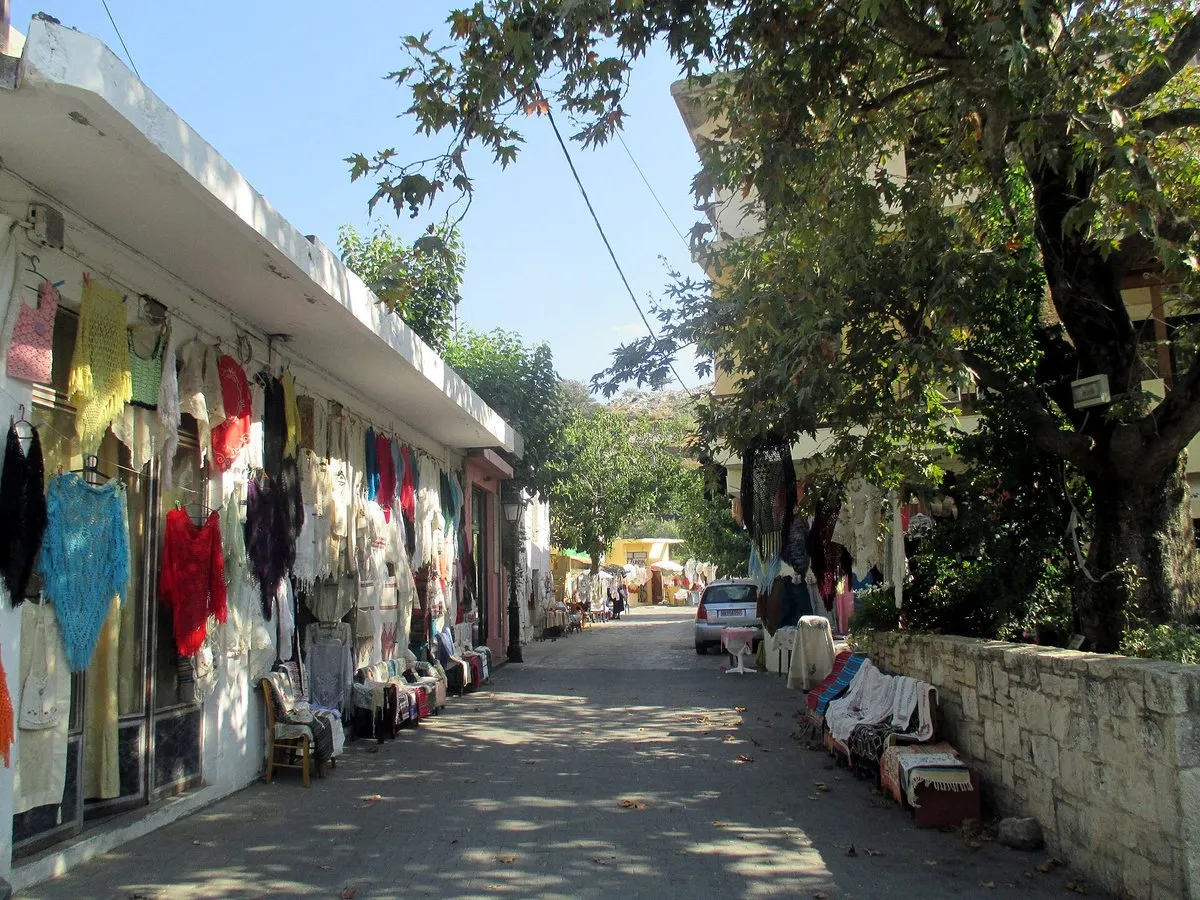
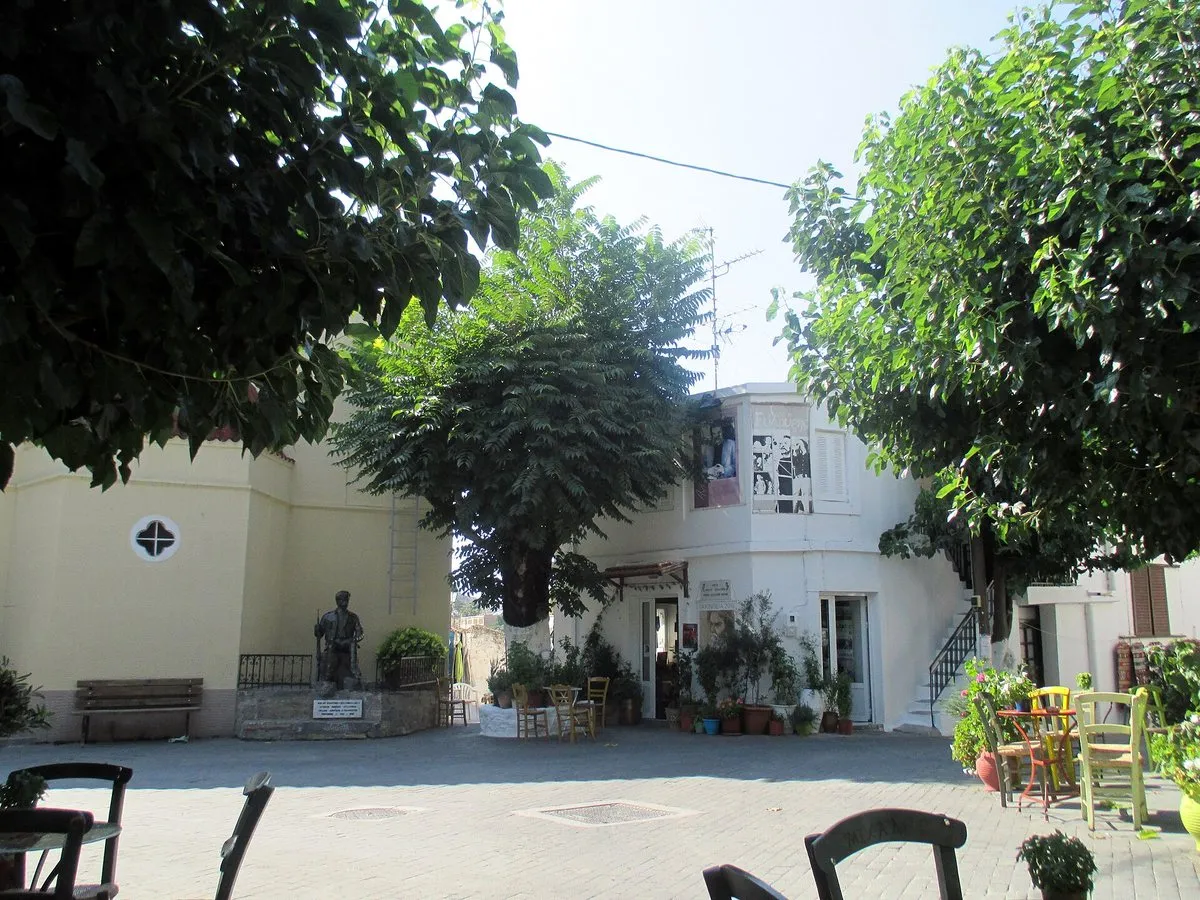
- the old quarter’s small plateia — kafeneia, the church, women selling the famous Anogia weavings from doorway looms; the memorials to 1944 stand here, and the German order of destruction is displayed verbatim. Read it.
- The music
- lyra is civic religion — festivals and summer concerts (especially around mid-August commemorations and the Yakinthia events on the mountain) turn the village into the island’s stage; even ordinary nights, a kafeneio radio educates.
- The food
- antikristo lamb — staked around open fire — is the local liturgy, plus ofto, village cheese and honey; grill houses on the spine and tavernas below serve it at €35–55 for two, feast-grade.
- Etiquette
- greet first, photograph people only after; black-clad elders and armed-mountain iconography are heritage, not props.
What happened here in 1944
On 13 August 1944, following the abduction of General Kreipe and sustained resistance activity in the area, the German command issued a written order to destroy Anogia. The text is displayed in the village and it is worth reading in full rather than summarised: it names the village, orders it razed, and orders every male inhabitant found in it or within a kilometre of it to be executed.
The village burned for weeks. The population that survived did so in the mountains. What stands today was rebuilt afterwards, which is why the upper spine looks like 1950s concrete rather than a preserved old town — that is not neglect, it is the record.
The memorials in the lower square are not a tourist stop. Give them the minutes they ask for before you go and eat lamb.
The music, and why it comes from here
Anogia produced Nikos Xylouris, the most famous Cretan voice of the twentieth century, and his brother Psarantonis, who is still playing. The family continues into a fourth generation — Psarogiorgis on laouto, and his sons performing as the Xylourakia. Nikos’s house in the lower village is a small museum.
That concentration is not coincidence. Mountain shepherd villages held the lyra tradition when the coast was letting it go, and Anogia held it hardest. If you want to understand what you are hearing, the guide to panigiri music covers the names and the instruments.
The village’s own festival calendar peaks around the mid-August commemorations and the Yakinthia events up on the mountain — dates worth checking if you are here in summer.
The honest visit
Late morning arrival, lower-quarter loop with the memorials given their minutes, loom-shopping honestly (the textiles are genuine craft), the antikristo lunch as centrepiece, coffee among the black-shirted domino players, and either the descent or — the connoisseur extension — the road up to the Nida plateau and the Ideon cave, Zeus’ other nursery, 40 minutes higher.
The honest downside
Anogia is not quaint: the upper spine is workaday concrete, the mood carries mountain gravity, and visitors expecting performed folklore get authenticity’s cooler welcome instead. Prices for the famous lamb are fair, not cheap.
Worth your time if: you want the village where Cretan identity concentrates hardest. Skip it if: you need your villages pretty and light — Margarites, down the same mountain, plays that part beautifully.
Photos on this page: both by Tomisti (CC BY-SA 4.0), via Wikimedia Commons, resized for the web. Everything above was checked for the date shown at the top of this guide. Nobody pays to be featured in a guide — no business, no sponsor, no paid mention, ever. Adverts, where they appear, are labelled as adverts.
Why is Anogia famous?
Three reasons at once: it was burned to the ground in August 1944 and its men executed by written German order for its role in the resistance and the Kreipe abduction; it produced the greatest names in Cretan lyra music; and its shepherd economy made it wealthy enough to owe tourism nothing.
How far is Anogia from Heraklion?
About 50 minutes on good mountain roads, and roughly the same from Rethymno. The village sits at 740 metres on the northern shoulder of Psiloritis and splits into a lower lane-and-square quarter and an upper commercial spine.
What should you eat in Anogia?
Antikristo lamb, staked around an open fire, is the local liturgy - plus ofto, village cheese and honey. Expect roughly EUR35-55 for two at feast grade. Prices for the famous lamb are fair rather than cheap.
Is Anogia a pretty village?
Not in the way visitors often expect. The upper spine is workaday concrete and the mood carries mountain gravity. If you want your villages pretty and light, Margarites down the same mountain plays that part beautifully. Anogia offers authenticity rather than charm.
What can you do near Anogia?
The connoisseurs extension is the road up to the Nida plateau and the Ideon cave, about 40 minutes higher - the emptiest high country you can reach on tarmac in Crete. Take a jacket whatever the coast is doing.
One email a month — only when something on this island actually changes. No spam, no partners, one-click unsubscribe. Read past issues before you decide.