Zaros: The Honest Guide to the Water Village
Spring water, a small mountain lake, trout tavernas and the Rouvas gorge — the green exception on Psiloritis' dry southern flank.
Zaros is the village water built: springs off Psiloritis feed the bottling plant that put its name on half the island’s tables, fill the small artificial lake of Votomos just above the village, and raise the trout and salmon-trout that made its tavernas an inland institution. Green, shaded and cool by Messara standards, it is the classic “lunch in the mountains” day from the southern beaches — and the trailhead for one of central Crete’s best gorge walks.
The honest facts
- Position
- on Psiloritis’ southern skirt, ~45 minutes from Matala/Phaistos country, ~1h from Heraklion.
- The lake
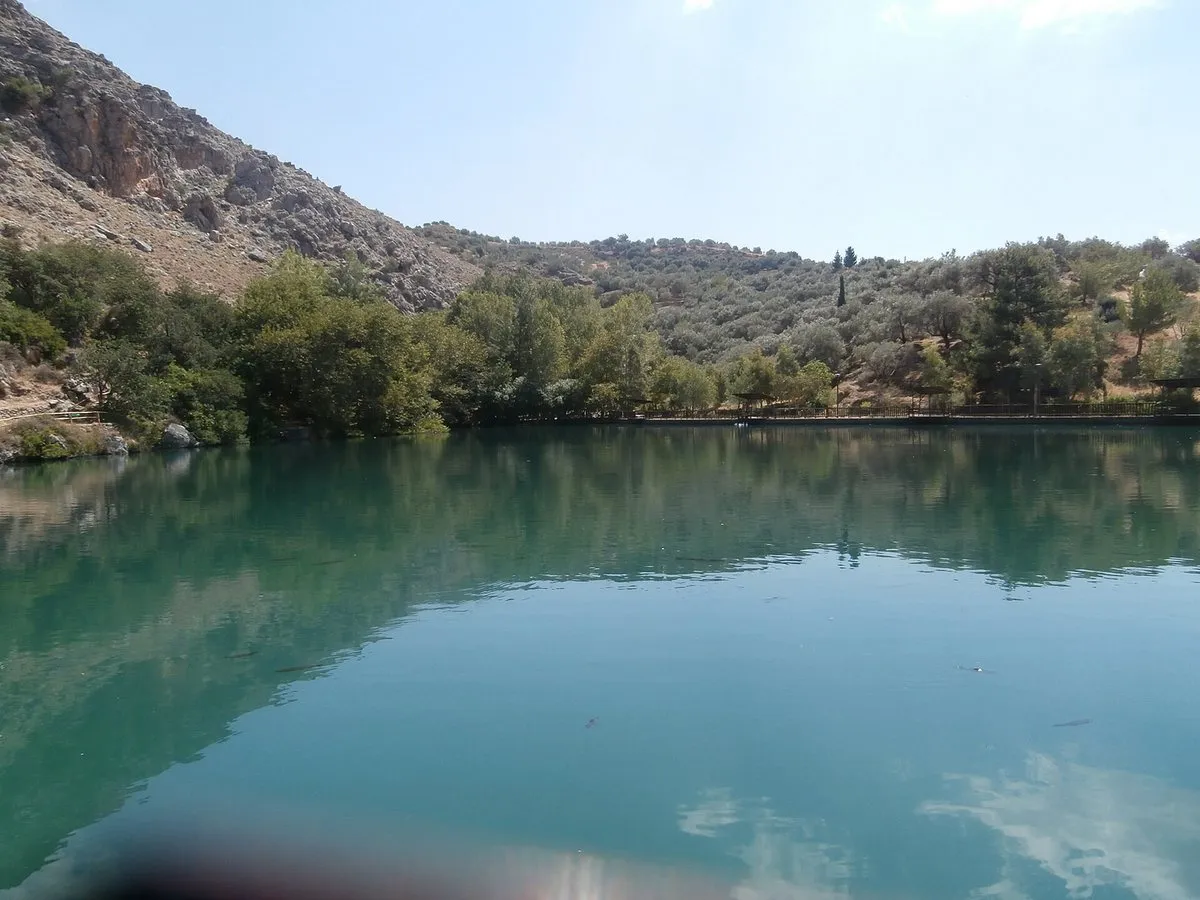
- Votomos is small, man-made and genuinely pretty — ducks, plane trees, a lakeside taverna, an easy stroll circuit. Manage expectations to “charming pond”, then be charmed.
- The trout
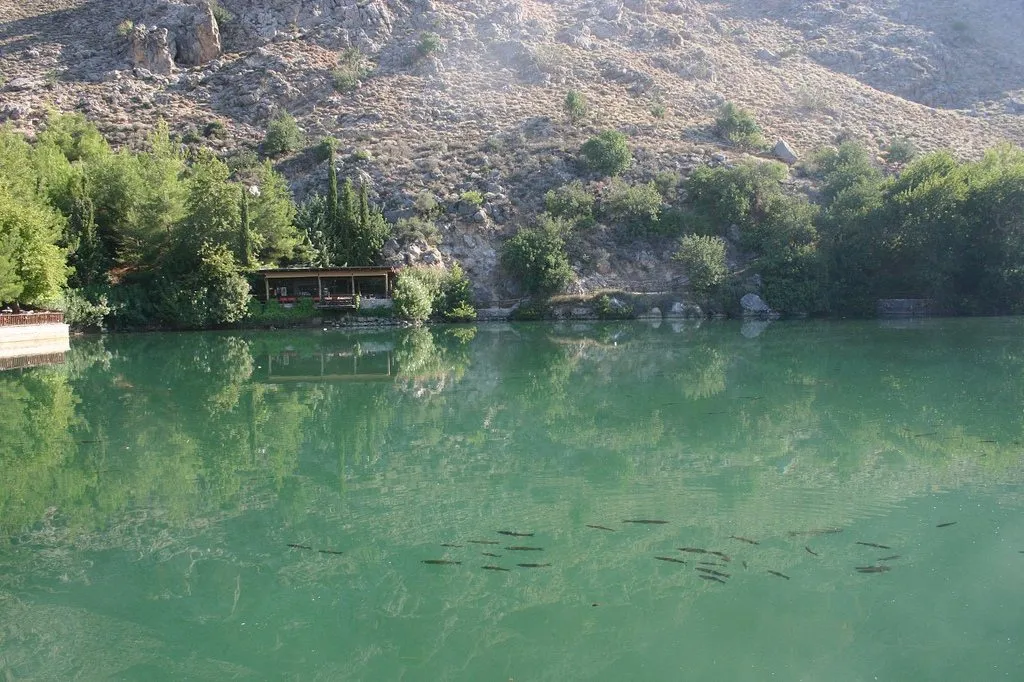
- farm-raised in spring water and grilled or fried at the lake and village tavernas — the local order, typically priced per portion or kilo; hear the number first as always.
- Rouvas gorge
- from the lake, the marked path climbs through oak forest toward the Rouvas plateau and the chapel of Agios Ioannis — count 2–2.5 hours up at walking pace, the same back, shade-rich by Cretan standards and gorgeous in spring. Proper shoes; water regardless of the irony.
- The monastery
- Moni Vrontisiou, ten minutes west, adds a Venetian fountain, big views and fig-tree calm to the loop.
The proven day
Beach-country departure mid-morning, Vrontisiou first while it is cool, lake arrival for the pre-lunch stroll, trout lunch under the planes, then either the gorge’s first forested kilometre as digestion or the full walk for the committed, coffee in the village lanes, golden-hour drive back. Inland Crete, one easy plate at a time.
Getting there
Zaros sits on the southern skirt of Psiloritis, about an hour from Heraklion through the Messara and roughly 45 minutes from Matala and the Phaistos sites, which is why it works as the mountain lunch from the southern beaches rather than a destination from the north coast. The roads are good; the last climb is gentle by Cretan standards. From the Hersonissos–Malia coast it is a full cross-island day of well over an hour and a half each way — possible, but the Lasithi plateau does the same job nearer.
The Rouvas walk, honestly
From the lake the marked path climbs through oak forest — genuinely shaded, rare in Crete — toward the Rouvas plateau and the chapel of Agios Ioannis: count 2–2.5 hours up at walking pace and the same back, so the full walk is a real half-day. Spring is the season, when the forest floor is flowering and the stream is running; in August it belongs to the early morning. Most visitors do the first forested kilometre after lunch as digestion, turn back when the shade thins, and lose nothing they came for. Real shoes, and water — the irony of carrying water to Zaros is noted, and the springs are at the bottom, not the top.
Lunch, and the order of the day
The trout and salmon-trout are farm-raised in spring water and grilled or fried at the lakeside and village tavernas; they are priced per portion or by the kilo, so hear the number first, as always. Summer Sundays fill the lakeside with Cretan families — arguably the best sign a mountain taverna can give — so go on a weekday or arrive before one. The proven shape: Moni Vrontisiou ten minutes west first, while it is cool, for the Venetian fountain and the big view; the lake circuit before lunch; trout under the plane trees; the forest or the village lanes after; the golden-hour drive back to the coast.
The honest downside
Zaros’ fame keeps its lakeside busy on summer Sundays with Cretan families (arguably a feature); the lake is modest if you arrived expecting alpine drama; and the full Rouvas walk is a real half-day that August afternoons will contest.
Worth your time if: a green, cool, delicious counterweight to beach days sounds correct. Skip it if: leaving the coast requires a spectacle guarantee — Zaros deals in pleasantness, expertly.
Photos on this page: the lake by C messier (CC BY-SA 3.0) and the spring water by Bojan Cekrlic (CC BY-SA 2.0), via Wikimedia Commons, resized for the web. Everything above was checked for the date shown at the top of this guide. Nobody pays to be featured in a guide — no business, no sponsor, no paid mention, ever. Adverts, where they appear, are labelled as adverts.
What is Lake Votomos at Zaros?
A small, man-made and genuinely pretty lake just above the village - ducks, plane trees, a lakeside taverna and an easy stroll circuit. Manage expectations to charming pond, then be charmed.
Why is Zaros known for trout?
Springs off Psiloritis feed the village, and the trout and salmon-trout raised in that spring water are grilled or fried at the lake and village tavernas. It is the local order, typically priced per portion or kilo - hear the number first as always.
How long is the Rouvas gorge walk?
From the lake, the marked path climbs through oak forest toward the Rouvas plateau and the chapel of Agios Ioannis - count two to two and a half hours up at walking pace and the same back. It is shade-rich by Cretan standards and gorgeous in spring.
Where is Zaros?
On Psiloritis southern skirt, about 45 minutes from the Matala and Phaistos country and an hour from Heraklion.
What else is near Zaros?
Moni Vrontisiou ten minutes west adds a Venetian fountain, big views and fig-tree calm to the loop.
One email a month — only when something on this island actually changes. No spam, no partners, one-click unsubscribe. Read past issues before you decide.